
Industrial Calibration Services
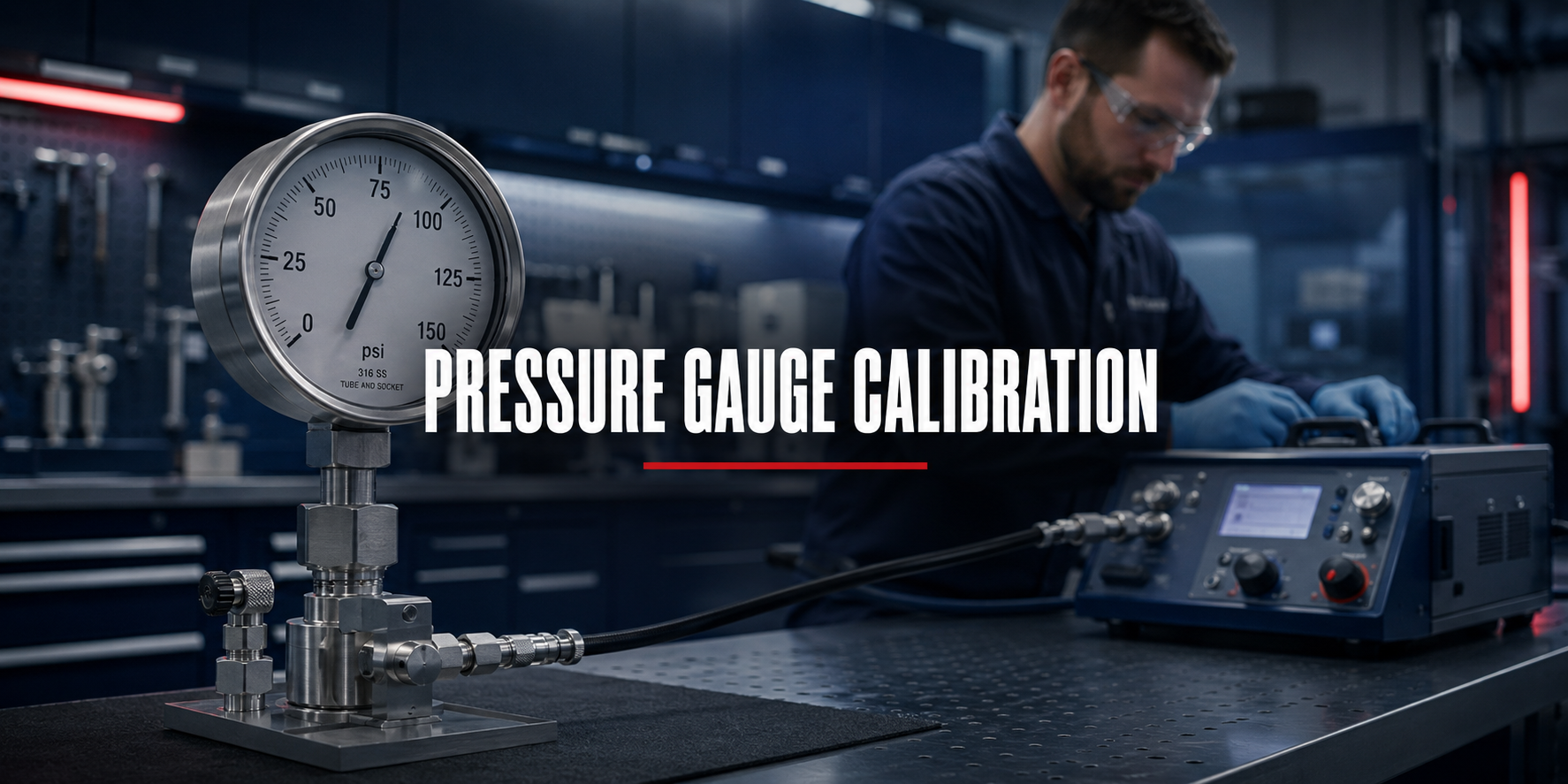
Pressure Gauge Calibration Houston: Protecting Accuracy, Safety and Compliance
Accurate pressure measurements help Houston-area oil and gas, petrochemical, pipeline and manufacturing companies operate safely, maintain quality and prevent costly equipment problems.
Reliable Pressure Measurements
Why Pressure Gauge Accuracy Matters
A pressure gauge may be relatively small compared with the equipment it monitors, but an inaccurate reading can have a major effect on an industrial operation. Pressure measurements are used to evaluate process conditions, protect equipment, confirm product quality and help personnel recognize potentially unsafe situations.
When a gauge displays an incorrect PSI reading, operators may make decisions based on information that does not reflect actual system conditions. The result can be inefficient production, rejected work, premature equipment wear, unplanned downtime or increased safety risk.
Professional pressure gauge calibration in Houston helps determine whether an instrument is reading within its required tolerance and provides documentation that supports quality-control and audit requirements.
PSI Calibration Capability
Houston Precision calibrates pressure gauges, pressure calibrators and pressure modules at ranges up to 10,000 PSI.
Understanding Gauge Drift
Why Do Pressure Gauges Lose Accuracy?
Pressure instruments can gradually drift away from their original accuracy even when they appear to be functioning normally. The amount and speed of that change depend on the instrument, its working environment and how it is used.
01
Pressure Spikes
Sudden pressure changes can place stress on internal gauge components and affect future readings.
02
Vibration and Pulsation
Continuous vibration from pumps, engines, compressors and surrounding machinery can contribute to mechanical wear.
03
Temperature Changes
Exposure to changing temperatures can affect instrument components and measurement performance.
04
Overpressure
Operating beyond the gauge’s intended range may cause permanent damage, even if the pointer later returns to zero.
05
Age and Normal Wear
Springs, seals, linkages and other components can change after repeated use or extended service.
Pressure Instrument Services
Which Instruments May Require Calibration?
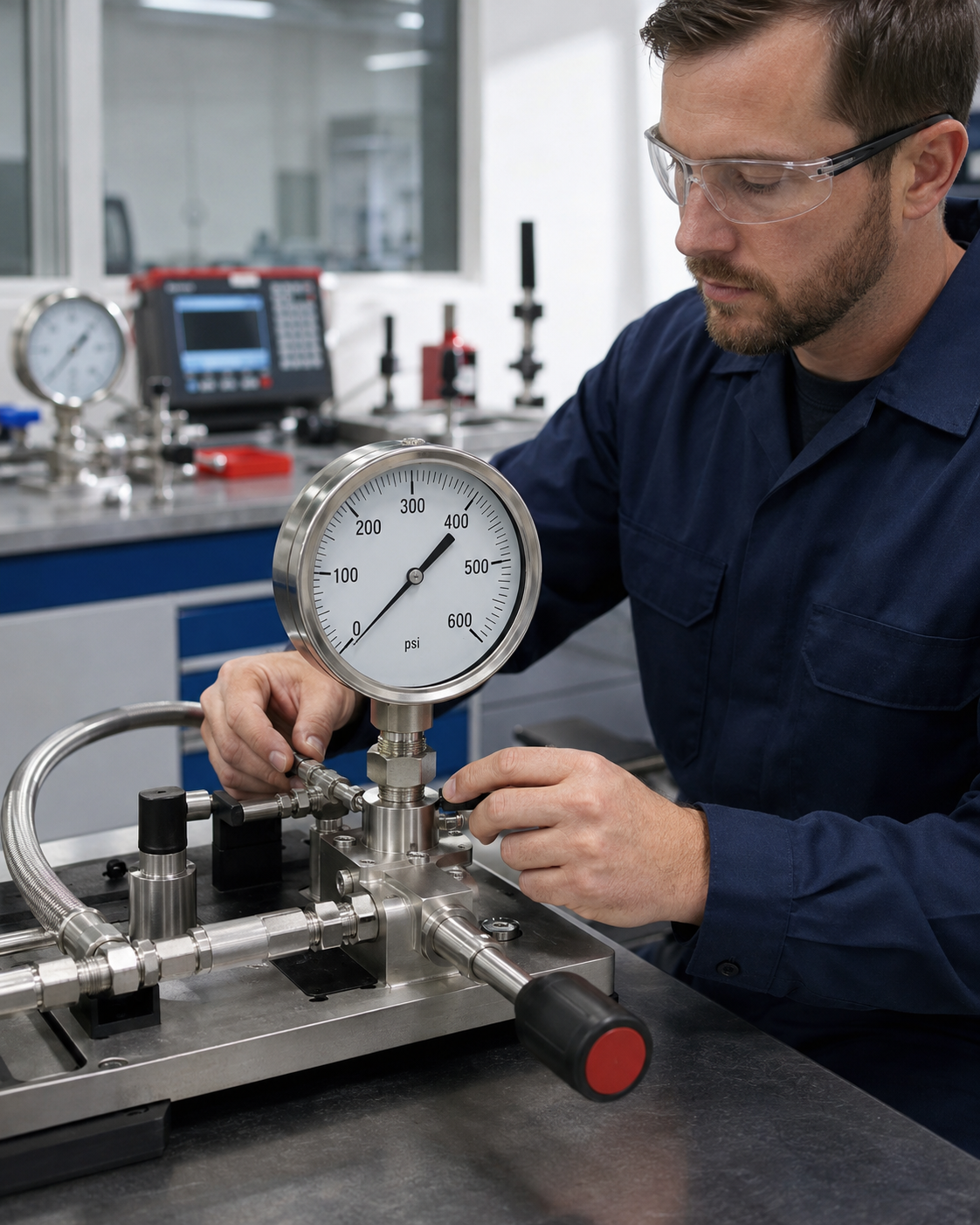
Pressure measurement systems can include several types of equipment. Each instrument should be evaluated according to its range, required accuracy, operating conditions and role within the process.
Pressure Gauges
Analog and digital pressure gauges used to monitor equipment, production systems and industrial processes.
Pressure Calibrators
Portable and laboratory instruments used to generate, control or verify known pressure values.
Pressure Modules
Interchangeable modules used with process and multifunction calibrators across different pressure ranges.
Vacuum Gauges
Instruments used to measure pressure below atmospheric pressure in vacuum-dependent applications.
Pressure Recorders
Recording instruments used to track pressure conditions and changes over a period of time.
Process Instruments
Pressure-related process equipment used by industrial, manufacturing and energy-service operations.
Operational Risk
What Can Happen When a Gauge Is Inaccurate?
01
Unsafe Operating Conditions
A gauge reading lower than the actual pressure could prevent personnel from recognizing a potentially hazardous condition.
02
Equipment Damage
Incorrect measurements can allow pumps, compressors, valves or pressure systems to operate outside desired limits.
03
Process Variation
Pressure errors can affect repeatability, product consistency and the ability to maintain controlled production conditions.
04
Audit Findings
Missing, expired or incomplete calibration records can create problems during customer, quality-system or regulatory audits.
Calibration Process
What Happens During Pressure Gauge Calibration?
The exact procedure depends on the instrument and its requirements, but a typical calibration compares the gauge’s readings against a known reference at selected points throughout its operating range.
1
Identification
The manufacturer, model, serial number, range and requested calibration requirements are confirmed.
2
Visual Inspection
The instrument is checked for obvious damage, contamination, loose connections or other visible problems.
3
Controlled Testing
Known pressure values are applied across the gauge’s operating range and compared with the displayed readings.
4
Results and Documentation
Calibration results are recorded to provide a documented history of instrument performance.
Calibration Records
As-Found and As-Left Results
Two of the most important terms on a calibration record are as-found and as-left. Together, these results help a company understand how the instrument performed when it arrived and its condition when calibration was completed.
As-Found Results
These document the instrument’s condition before an adjustment or corrective action is performed. If a gauge is outside tolerance, as-found data can help a company evaluate whether previous measurements or processes may have been affected.
As-Left Results
These document the instrument’s performance after authorized adjustment, when applicable. The results show the gauge’s condition when it is returned to service.
Calibration Intervals
How Often Should Pressure Gauges Be Calibrated?
There is no single calibration interval that is correct for every pressure gauge. Many companies begin with a scheduled interval based on manufacturer recommendations, customer requirements, quality procedures or industry experience. The interval can then be reviewed using the instrument’s calibration history and operating conditions.
Consider a Shorter Interval When:
- The gauge is used in a critical application
- Operating conditions include heavy vibration
- The instrument experiences frequent pressure cycling
- Previous calibration results show significant drift
- The gauge is exposed to harsh environments
Schedule Immediate Testing After:
- An overpressure event or unexpected pressure spike
- Impact, dropping or visible physical damage
- A pointer that does not return to zero
- Readings that conflict with other instruments
- Repairs or changes to the pressure system
Calibration intervals should be based on documented evidence rather than convenience alone. A gauge with a stable history may support its existing interval, while repeated out-of-tolerance results may indicate that more frequent calibration or replacement is appropriate.
Service Planning
Lab Calibration or Onsite Service?
The right service method depends on the instruments, production schedule, equipment location and the number of items requiring calibration.
Controlled Environment
Laboratory Calibration
Lab service can be an efficient choice for portable gauges and instruments that can be removed from service and transported safely.
- Suitable for individually submitted instruments
- Controlled calibration environment
- Access to laboratory calibration equipment
- Convenient for planned calibration batches
Service at Your Facility
Onsite Calibration
Onsite service may help facilities reduce equipment transportation and coordinate calibration around operational schedules.
- Service performed at the customer’s facility
- Useful for larger calibration programs
- Reduced movement of sensitive equipment
- Coordination with planned outages or maintenance
Houston Industry Applications
Pressure Calibration for Demanding Industrial Operations
Houston and the Gulf Coast are home to operations where dependable pressure measurement is essential. A structured calibration program can support quality, safety and equipment reliability across a wide range of industries.
Petrochemical Facilities
Pipeline Operations
Industrial Manufacturing
Machine Shops
Energy Services
Equipment Repair
Quality Laboratories
Houston Precision
Choose an Experienced Houston Calibration Provider
Houston Precision provides calibration services for companies that depend on accurate measurement equipment. Pressure calibration capabilities include pressure gauges, pressure calibrators and pressure modules at ranges up to 10,000 PSI.
Our Houston location serves companies throughout the region with laboratory and onsite calibration options. We can also help customers coordinate pressure instruments with dimensional, mechanical and other calibration requirements as part of a more organized equipment-management program.
Convenient service for Gulf Coast industrial companies.
Calibration support for multiple instrument categories.
Records that support equipment and quality programs.
Request a Quote
Schedule Pressure Gauge Calibration in Houston
Send Houston Precision your instrument information to request pricing or discuss your pressure calibration requirements.