
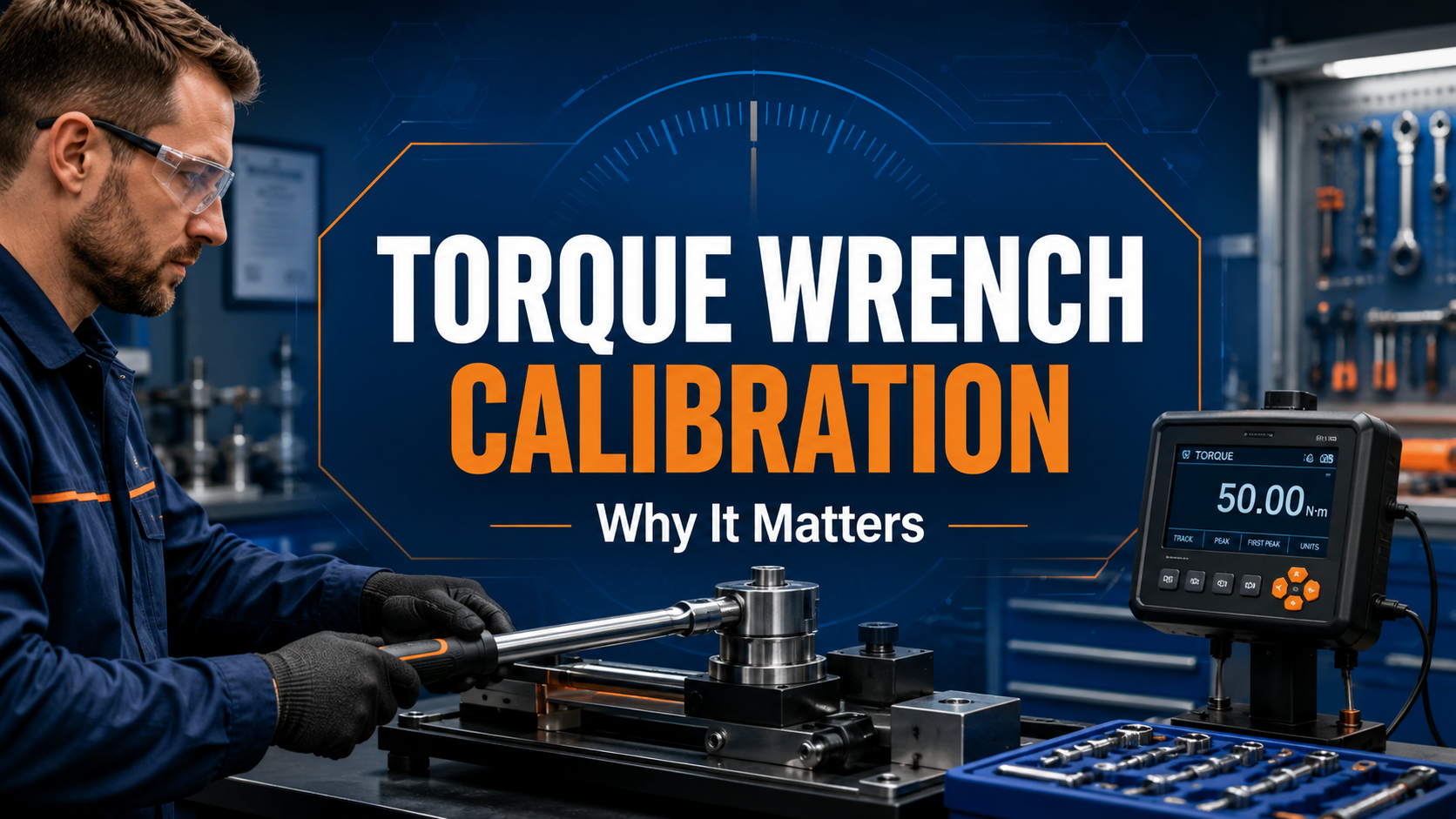
Torque wrenches are used every day in manufacturing, energy, oilfield service, maintenance, assembly, fabrication, aerospace, automotive, and industrial environments. When a fastener needs to be tightened to a specific value, the torque wrench becomes a quality-control tool.
But a torque wrench is only useful if it applies torque accurately.
If the tool is out of calibration, a technician may believe a fastener has been tightened correctly when it has not. That can lead to loose connections, over-tightened components, damaged threads, failed inspections, rework, equipment issues, or customer complaints.
For Houston companies that rely on torque-controlled assembly or inspection, torque wrench calibration helps protect quality, safety, compliance, and production consistency.
What Is Torque Wrench Calibration?
Torque wrench calibration is the process of testing a torque wrench against a known standard to verify whether the tool is applying torque within an acceptable tolerance.
During calibration, the torque wrench is checked at specific points across its range. The results show whether the tool is accurate enough for use or whether it needs adjustment, repair, recalibration, restricted use, or replacement.
Torque calibration may apply to:
- Click torque wrenches
- Dial torque wrenches
- Digital torque wrenches
- Beam torque wrenches
- Torque screwdrivers
- Torque multipliers
- Torque testers
- Torque tools used in production or inspection
Because torque tools are often used for critical assembly work, calibration should be part of a documented tool-control program.
Why Torque Wrench Calibration Matters
Torque affects the clamping force created when a fastener is tightened. If the torque is too low, the connection may loosen or fail. If the torque is too high, the fastener, threads, gasket, flange, or component may be damaged.
An out-of-calibration torque wrench can cause:
- Under-tightened fasteners
- Over-tightened fasteners
- Damaged threads
- Cracked or distorted components
- Assembly failures
- Failed quality inspections
- Customer returns or complaints
- Rework and production delays
- Audit findings
- Unreliable maintenance records
In industries where fastener integrity matters, torque calibration is not just a paperwork requirement. It is part of making sure the work was done correctly.
Common Industries That Rely on Torque Calibration
Many Houston-area industries depend on properly calibrated torque tools.
These include:
- Oil and gas
- Energy services
- Manufacturing
- Aerospace
- Automotive
- Industrial maintenance
- Fabrication
- Heavy equipment
- Valve and pump service
- Pipeline and flange assembly
- Machine shops
- Quality inspection departments
In these environments, torque tools may be used for assembly, repair, maintenance, inspection, or final verification. If the tool is inaccurate, the quality of the finished work may be affected.
How Often Should Torque Wrenches Be Calibrated?
Many companies use a 12-month calibration interval as a starting point for torque wrenches. However, the correct interval depends on usage, application risk, customer requirements, environment, and calibration history.
A torque wrench may need calibration more often if it is:
- Used daily
- Used across multiple shifts
- Used for critical assembly
- Used in oilfield, aerospace, energy, or safety-sensitive applications
- Dropped or overloaded
- Exposed to dirt, oil, coolant, or harsh shop conditions
- Used by multiple operators
- Stored improperly
- Previously found out of tolerance
- Required by customer or quality procedures
For high-use or critical torque tools, a 3- to 6-month interval may be more appropriate. For low-use tools with stable history, a longer interval may be acceptable if your quality system and customer requirements allow it.
The best calibration interval should be based on tool history, risk, and actual use—not guesswork.
Signs a Torque Wrench Needs Calibration Now
Do not wait until the next scheduled due date if the torque wrench appears questionable.
Schedule calibration immediately if:
- The wrench was dropped
- The wrench was overloaded
- The tool was used past its maximum range
- The click feels inconsistent
- The handle, ratchet, or head is damaged
- Readings do not match another verified tool
- The tool was exposed to harsh conditions
- The wrench has not been used in a long time
- The tool failed a routine in-house check
- The torque value is involved in a quality issue
- The tool is due before a customer audit or job requirement
A torque wrench should be removed from service if there is any doubt about its accuracy.
What Happens During Torque Wrench Calibration?
During torque wrench calibration, the tool is tested against a known torque standard. The technician checks whether the tool produces torque values within the required tolerance.
The process may include:
- Inspecting the tool condition.
- Confirming the tool ID, range, and units.
- Testing the wrench at multiple torque points.
- Recording as-found results.
- Adjusting the tool if needed and if possible.
- Retesting after adjustment.
- Recording as-left results.
- Documenting pass/fail status.
- Recommending repair or replacement if needed.
The calibration report helps your quality team understand whether the tool was acceptable when received and whether it was returned to service within tolerance.
What Does “As Found” and “As Left” Mean?
Torque wrench calibration reports may include as found and as left results.
As found means the condition of the tool before adjustment or repair. This tells your quality team whether the wrench was in tolerance when it arrived for calibration.
As left means the condition of the tool after adjustment, repair, or final verification. This tells your team whether the wrench is acceptable to return to service.
As-found data is especially important if the tool failed calibration. It helps determine whether previous work may need to be reviewed.
What If a Torque Wrench Fails Calibration?
If a torque wrench fails calibration, it should not be used until the issue is resolved.
The next step depends on the failure and the value of the tool.
Possible outcomes include:
- Adjustment and recalibration
- Repair and recalibration
- Restricted use
- Shortened calibration interval
- Product or work impact review
- Replacement
- Removal from service
Your quality team should also review how the tool was used since its last acceptable calibration. If the torque wrench was used for critical work, you may need to determine whether any assemblies, parts, or maintenance records were affected.
Repair or Replace: What Is the Better Option?
Some torque wrenches can be adjusted or repaired. Others are better replaced.
Repair may make sense when:
- The tool is valuable
- The failure is minor
- The tool can be adjusted back into tolerance
- Replacement cost is high
- Parts are available
- The tool has not repeatedly failed
Replacement may be better when:
- The wrench repeatedly fails calibration
- The tool is heavily worn
- The ratchet or mechanism is damaged
- Repair cost is close to replacement cost
- The tool is no longer reliable
- The tool is low-cost and high-use
- The application is critical and confidence matters
If a torque tool is no longer economical to repair, replacing it may be the safest and most cost-effective long-term decision.
If a torque wrench is no longer economical to repair, you can review replacement precision measuring tools through Deterco Online.
Proper Torque Wrench Handling Between Calibration Cycles
Good tool handling helps torque wrenches stay reliable between calibration cycles.
Best practices include:
- Store torque wrenches in protective cases
- Avoid dropping or throwing tools
- Do not use a torque wrench as a breaker bar
- Do not exceed the rated torque range
- Keep the tool clean and dry
- Avoid unnecessary exposure to oil, dirt, coolant, or moisture
- Return adjustable click-type torque wrenches to the recommended storage setting
- Use the correct wrench size and range for the job
- Train operators on proper torque technique
- Remove questionable tools from service immediately
Calibration verifies tool accuracy, but daily handling helps preserve it.
Choosing the Right Torque Wrench Range
Using the wrong torque wrench for the job can affect measurement reliability.
A wrench should be selected based on the required torque value and the tool’s usable range. If a torque value is near the bottom or top of the wrench’s range, consider whether another tool is better suited for the application.
Good tool selection helps improve consistency, reduce wear, and support better calibration performance over time.
Torque Wrench Calibration and Audit Readiness
Calibration records are important for audits, customer requirements, corrective actions, and internal quality reviews.
A strong torque tool program should include:
- Unique tool ID numbers
- Calibration due dates
- Defined recall intervals
- Calibration certificates or reports
- As-found and as-left data when available
- Failed calibration records
- Repair or adjustment history
- Tool storage and handling procedures
- Operator training
- Review of out-of-tolerance tools
When torque tools are used for critical assembly or acceptance work, documentation should clearly show that the tools were controlled, calibrated, and fit for use.
Lab Calibration vs. Onsite Torque Calibration
Many torque wrenches and torque tools are good candidates for lab calibration because they are portable and benefit from controlled testing equipment.
Lab calibration is often best for:
- Click torque wrenches
- Dial torque wrenches
- Digital torque wrenches
- Torque screwdrivers
- Torque tools requiring adjustment or repair
- Tools that need documented inspection
Onsite calibration may be appropriate for certain production setups, torque systems, or situations where a company has many tools due at one time. The right option depends on the equipment, volume, risk, and service requirements.
Houston Precision offers both lab and onsite calibration capabilities for industrial customers, helping companies choose the right calibration approach based on the tool and application.
How Houston Companies Can Build a Better Torque Calibration Program
A strong torque calibration program should be practical, documented, and based on actual tool usage.
Here is a simple process:
Step 1: Create a Torque Tool Inventory
List all torque wrenches, torque screwdrivers, torque testers, and related tools. Include manufacturer, model, serial number, range, units, location, and assigned user or department.
Step 2: Assign Risk Levels
Identify which tools are used for critical assembly, final inspection, safety-related work, or customer-controlled jobs. These tools may need tighter control and shorter intervals.
Step 3: Set Baseline Calibration Intervals
Many companies start with annual calibration, then adjust based on tool history and application risk.
Step 4: Review Calibration Results
Look for tools that pass consistently and tools that fail, drift, or require frequent adjustment.
Step 5: Adjust Intervals Based on History
Shorten intervals for high-use, high-risk, or unstable tools. Consider longer intervals only for low-risk tools with clean history and documented justification.
Step 6: Train Operators
Operator technique affects torque results. Training can reduce misuse, improve consistency, and help tools last longer.
Step 7: Document Everything
Keep calibration reports, repair notes, interval decisions, failed calibration reviews, and replacement records organized and audit-ready.
Need Torque Wrench Calibration in Houston?
Houston Precision provides calibration and repair services for Houston-area manufacturers, energy service companies, machine shops, inspection teams, and quality departments.
If your torque wrenches, torque tools, or other precision instruments are due for calibration, Houston Precision can help you maintain accurate tools, clear documentation, and a calibration schedule that fits your operation.
Request a quote today to schedule torque wrench calibration in Houston.
FAQs
How often should a torque wrench be calibrated?
Many companies calibrate torque wrenches every 12 months. Tools used heavily, used for critical work, dropped, overloaded, or previously found out of tolerance may need calibration every 3 to 6 months or immediately after a suspected issue.
What causes a torque wrench to go out of calibration?
Common causes include normal wear, drops, overloading, improper storage, dirt or oil contamination, harsh work environments, heavy use, and using the wrench outside its intended range.
Should a torque wrench be calibrated after being dropped?
Yes. If a torque wrench is dropped, overloaded, or damaged, it should be removed from service and calibrated before being used again.
What happens if a torque wrench fails calibration?
The tool should be adjusted, repaired, recalibrated, restricted, replaced, or removed from service. Your quality team may also need to review whether any previous work was affected.
Can a torque wrench be repaired?
Some torque wrenches can be adjusted or repaired, depending on the type of tool, condition, parts availability, and cost. If repair is not economical or the tool is unreliable, replacement may be the better option.
Does Houston Precision provide torque calibration services?
Yes. Houston Precision provides torque calibration and repair services as part of its broader calibration scope for industrial customers.