
Calipers and micrometers are two of the most frequently used precision measuring tools in machine shops, manufacturing facilities, inspection departments, oilfield service companies, and quality labs. Because they are used so often, they are also among the tools most likely to experience wear, damage, or measurement drift over time.
That leads to a common question:
How often should calipers and micrometers be calibrated?
For many companies, the standard answer is once every 12 months. However, that is not a universal rule. The right calibration interval depends on how often the tool is used, the environment it is used in, the required tolerance, the risk of bad measurements, and your company’s quality requirements.
NIST does not require or recommend one specific recalibration interval for all measuring instruments. Instead, calibration intervals should be determined based on the instrument, its use, and the organization’s quality needs.
For Houston companies that rely on precision measurements every day, choosing the right calibration schedule helps protect product quality, reduce rework, and keep inspection records audit-ready.
Why Caliper and Micrometer Calibration Matters
Calipers and micrometers are used to verify dimensions, inspect parts, confirm tolerances, and support production decisions. If either tool is out of calibration, your team may believe a part is acceptable when it is not—or reject a good part because of inaccurate readings.
That can lead to:
- Scrap and rework
- Failed inspections
- Customer complaints
- Production delays
- Audit findings
- Inconsistent quality records
- Costly measurement disputes
Calipers are widely used for inside, outside, depth, and length measurements, while micrometers are typically used for higher-precision measurements than calipers.
Even when a tool looks fine, regular use can affect accuracy. Dirt, chips, oil, worn contact surfaces, impact damage, loose components, temperature changes, and improper storage can all create measurement problems.
The Common Calibration Interval: 12 Months
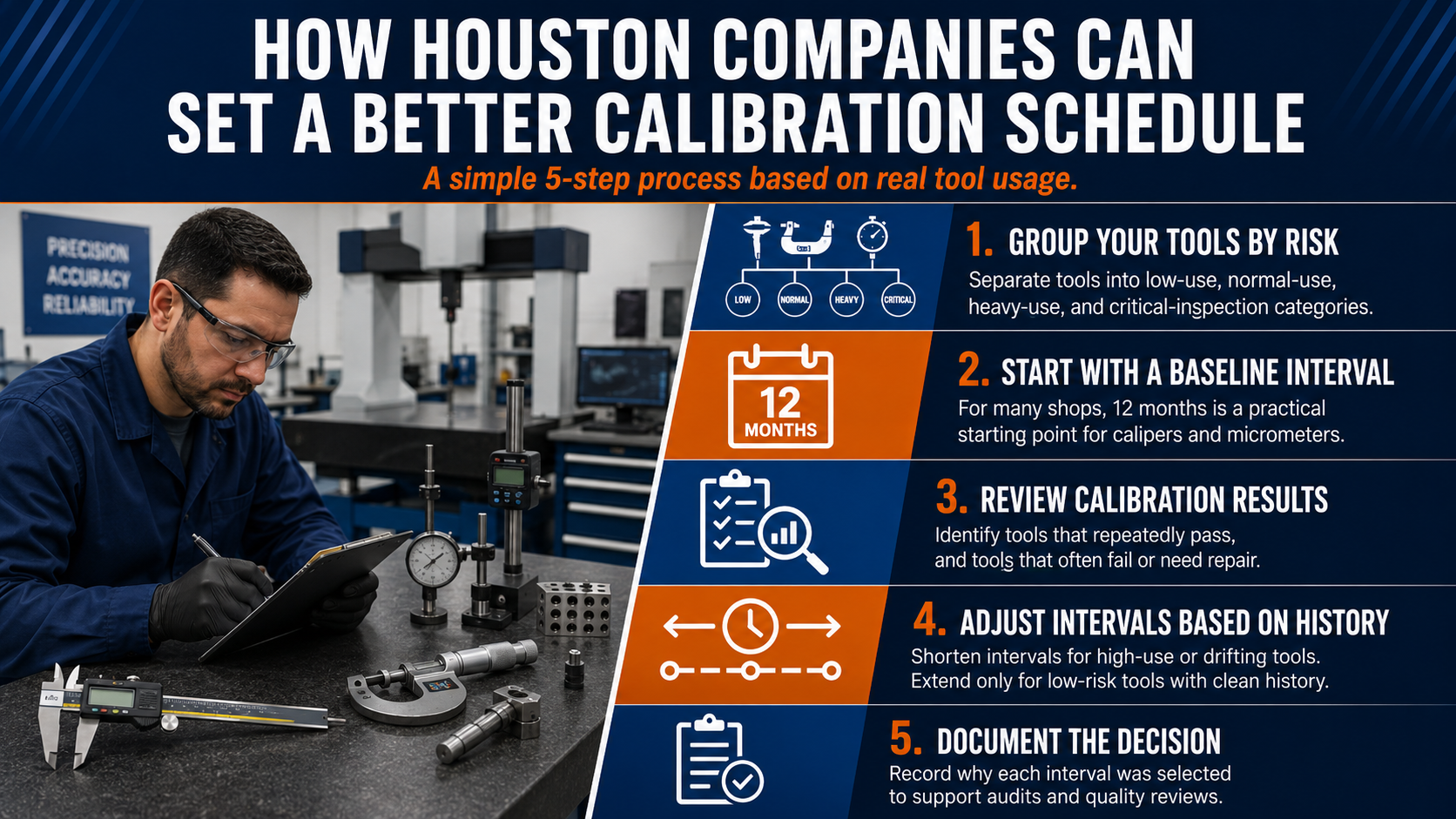
A 12-month calibration interval is a common starting point for calipers and micrometers. It is simple to manage, easy to document, and often fits the needs of companies with moderate tool usage.
Annual calibration may be appropriate when:
- The tool is used under normal shop or inspection conditions
- The tool is not used for extremely tight tolerances
- The tool has a stable calibration history
- The tool is handled and stored properly
- The tool is not frequently dropped, exposed to coolant, or used in harsh environments
- Your customer or quality system does not require a shorter interval
However, annual calibration should not be treated as automatic for every situation. If a caliper or micrometer is used heavily, exposed to harsh conditions, or tied to critical inspection decisions, it may need to be calibrated more often.
When Calipers and Micrometers Should Be Calibrated More Often
Some tools need shorter calibration intervals because the risk of inaccurate measurement is higher.
Consider calibrating calipers and micrometers every 3 to 6 months if they are:
- Used daily or across multiple shifts
- Used on high-value or safety-critical parts
- Used in oilfield, aerospace, defense, or tight-tolerance manufacturing
- Frequently handled by multiple operators
- Exposed to coolant, dust, chips, oil, heat, or vibration
- Used in field or shop-floor environments
- Frequently transported between work areas
- Showing inconsistent readings
- Previously found out of tolerance
- Required by customer specifications or audit requirements
The more a tool is used—and the more important its measurements are—the more often it should be verified.
When Longer Calibration Intervals May Be Acceptable
Some calipers and micrometers may not need annual calibration if they are rarely used and have a strong history of staying in tolerance. In those cases, a company may choose a longer interval, such as 18 or 24 months.
A longer interval may be reasonable when:
- The tool is used infrequently
- The tool is stored in a controlled environment
- The tool is not used for final acceptance decisions
- The tool has passed multiple calibration cycles with no issues
- The tool is backed up by routine in-house checks
- Customer and quality requirements allow it
That said, longer intervals should be based on documented history—not guesswork. Calibration intervals should be reviewed over time using the tool’s actual condition and past calibration results.
Factors That Affect Calibration Frequency
There is no single calibration schedule that fits every tool. The best interval depends on risk, usage, and history.
1. Frequency of Use
A micrometer used once a month in a controlled inspection room does not face the same wear as a caliper used daily on the shop floor. Tools that are used more often usually need more frequent calibration.
2. Required Accuracy
The tighter the tolerance, the more important calibration becomes. If the tool is used for critical dimensions, final inspection, or customer acceptance, calibration intervals should be more conservative.
3. Work Environment
Shop-floor environments can expose tools to chips, coolant, dust, oil, vibration, and temperature swings. Those conditions can affect tool condition and measurement performance.
4. Handling and Storage
Calipers and micrometers should be handled carefully and stored properly. Drops, impacts, overtightening, and improper storage can lead to inaccurate readings.
5. Calibration History
A tool with repeated out-of-tolerance findings may need shorter intervals. A tool with several clean calibration cycles may support a longer interval.
6. Customer or Industry Requirements
Some customers, contracts, or quality systems may specify calibration intervals. In those cases, the required interval should be followed unless an approved alternative is documented.
7. Risk of Incorrect Measurement
If an incorrect measurement could cause a serious quality issue, rejected shipment, safety concern, or expensive rework, a shorter interval is usually better.
Practical Calibration Interval Guide
Use this as a practical starting point for calipers and micrometers.
| Tool Usage / Risk Level | Suggested Interval |
|---|---|
| Low-use tool stored in inspection room | 12–24 months |
| Normal shop or quality department use | 12 months |
| Daily use on production floor | 6–12 months |
| Heavy use across multiple shifts | 3–6 months |
| Critical inspection or tight-tolerance work | 3–6 months |
| Tool recently dropped, damaged, or giving inconsistent readings | Calibrate immediately |
| Tool found out of tolerance during previous calibration | Shorten interval and monitor |
This table is a guide, not a universal rule. Your actual interval should be based on your quality system, customer requirements, instrument history, and risk level.
Signs a Caliper or Micrometer Needs Calibration Now
Do not wait for the next scheduled due date if the tool appears unreliable.
Schedule calibration immediately if:
- The tool was dropped
- The jaws or anvils are damaged
- The readings are inconsistent
- The display flickers or resets unexpectedly
- The zero point will not hold
- The tool does not repeat measurements
- The spindle, slide, or jaws feel loose
- The tool was exposed to coolant, oil, debris, or impact
- A part measurement does not match another verified instrument
- The tool is involved in a quality dispute or nonconformance
A calibration due date should be treated as the latest acceptable date—not the only time a tool should be checked.
What Happens During Caliper and Micrometer Calibration?
During calibration, the tool is inspected and compared against known standards. The goal is to verify whether the instrument measures within acceptable tolerance.
A calibration technician may check:
- General tool condition
- Cleanliness and visible damage
- Zero setting
- Repeatability
- Measurement accuracy at multiple points
- Inside, outside, depth, or step measurement functions for calipers
- Spindle condition and measuring faces for micrometers
- Digital display function, if applicable
- Documentation requirements
- Pass/fail status
Houston Precision provides lab gage and instrument services in a climate-controlled Polk Street laboratory, with technicians who repair and calibrate precision instruments to factory-specified tolerances.
Should Calipers and Micrometers Be Calibrated in a Lab?
In most cases, yes. Calipers and micrometers are usually good candidates for lab calibration because they are portable precision instruments that benefit from controlled conditions and bench-level inspection.
Lab calibration is especially useful when:
- The tool requires detailed inspection
- The tool may need adjustment or repair
- The tool is part of a formal recall program
- The tool is used for documented quality decisions
- You need calibration records for audits or customer requirements
Houston Precision’s lab services page specifically describes lab gage and instrument services performed in a climate-controlled laboratory.
What If a Caliper or Micrometer Fails Calibration?
If a caliper or micrometer fails calibration, it should not be used for inspection until the issue is resolved.
Possible next steps include:
- Clean and inspect the tool
- Adjust the tool, if possible
- Repair and recalibrate
- Limit the tool to non-critical use
- Remove the tool from service
- Replace the tool
Houston Precision describes itself as a one-stop shop for quality instrument purchases and calibration needs, and notes that it is a sister company of Deterco, Inc., a stocking supplier of API gauges, thread element gauges, and metrology measuring instruments.
For replacement tools, Deterco Online lists product categories for calipers, calibration master instruments, bore gauges, height gauges, granite surface plates, CMM systems, hardness testers, handheld process calibrators, and many other metrology products.
If a caliper or micrometer is no longer economical to repair, you can shop replacement precision measuring tools through Deterco Online.
Best Practices Between Calibration Cycles
Calibration is important, but day-to-day care also matters.
To keep calipers and micrometers reliable between calibration cycles:
- Clean tools after use
- Keep measuring faces free of chips and debris
- Store tools in protective cases
- Avoid dropping or stacking tools
- Do not overtighten micrometers
- Keep tools away from extreme temperature changes
- Check zero before use
- Use gage blocks or standards for routine verification
- Remove damaged or questionable tools from service
- Train operators on proper measuring technique
Good handling can reduce damage, improve repeatability, and help tools stay in tolerance longer.
Caliper vs. Micrometer Calibration: Is There a Difference?
Yes. While both tools are used for dimensional measurement, they are not identical.
Calipers are versatile and commonly used for inside, outside, depth, and step measurements. They are fast and convenient, which makes them popular on the shop floor.
Micrometers are typically used for higher-precision measurements and require careful technique. Because micrometers are often used for tighter tolerances, many companies treat them as higher-risk instruments than calipers.
That does not mean every micrometer needs a shorter interval than every caliper. It means the interval should be based on how the tool is used, what it measures, and how critical those measurements are.
Recommended Answer: How Often Should You Calibrate Them?
For most Houston shops and quality departments:
Calipers should usually be calibrated every 12 months.
Micrometers should usually be calibrated every 12 months.
However, shorten the interval to 3–6 months for tools that are heavily used, used in harsh environments, used for critical inspection, or have a history of failing calibration.
Calibrate immediately if the tool is dropped, damaged, producing inconsistent readings, or involved in a measurement issue.
Need Caliper or Micrometer Calibration in Houston?
Houston Precision provides lab gage and instrument calibration services for precision tools used by manufacturers, machine shops, energy service companies, inspection teams, and quality departments.
If your calipers, micrometers, gages, or other measuring instruments are due for calibration, Houston Precision can help you maintain reliable measurements, clear documentation, and a calibration schedule that fits your operation.
Request a quote today to schedule caliper and micrometer calibration in Houston.
FAQs
How often should calipers be calibrated?
Many companies calibrate calipers every 12 months. However, calipers used daily, exposed to harsh shop conditions, or used for critical inspection may need calibration every 3 to 6 months.
How often should micrometers be calibrated?
Micrometers are commonly calibrated every 12 months, but high-use or high-accuracy micrometers may need shorter intervals. If a micrometer is dropped, damaged, or producing inconsistent readings, it should be calibrated immediately.
Does NIST require a specific calibration interval?
No. NIST does not require or recommend one specific recalibration interval for all measuring instruments. Calibration intervals should be determined based on the instrument, usage, risk, and quality requirements.
Should calipers and micrometers be calibrated after being dropped?
Yes. If a caliper or micrometer is dropped, damaged, or starts giving inconsistent readings, it should be removed from service and calibrated before being used for inspection again.
Can I extend calibration intervals beyond one year?
Possibly. Longer intervals may be acceptable for low-use tools with stable calibration history, proper storage, and low measurement risk. The decision should be documented in your quality system.
What should I do if a caliper or micrometer fails calibration?
The tool should be adjusted, repaired, recalibrated, restricted to non-critical use, or replaced. If replacement is needed, Deterco Online carries calipers and other metrology measuring instruments.